If you've been using PNG for your web images, it might be time to consider an upgrade. WebP, developed by Google, offers the same quality and transparency as PNG — but with files that are 25-35% smaller. In this guide, we'll explore why WebP is rapidly becoming the new standard for web images.
What is WebP?
WebP is a modern image format that provides superior lossless and lossy compression for images on the web. It was developed by Google and first released in 2010, but it's only in recent years that browser support has become universal enough for production use.
Key features of WebP include:
- Lossless compression — 26% smaller than PNG with identical quality
- Lossy compression — 25-34% smaller than JPEG at equivalent quality
- Alpha channel transparency — just like PNG, but smaller
- Animation support — a more efficient alternative to GIF
PNG vs WebP: File Size Comparison
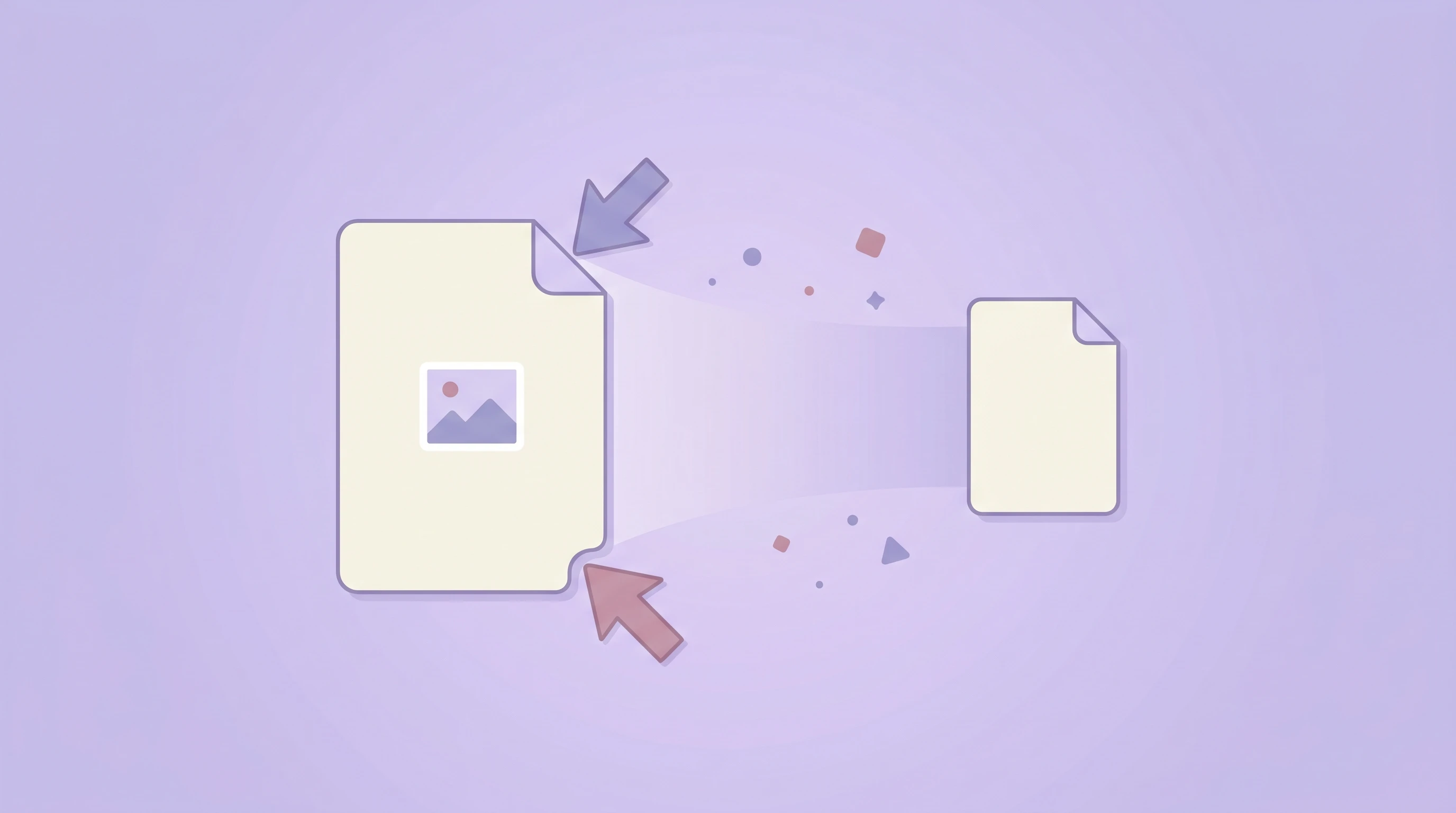
The biggest advantage of WebP over PNG is file size. Let's look at some real-world comparisons:
- A typical logo (500×500px): PNG 45KB → WebP 32KB (29% smaller)
- A UI screenshot (1920×1080px): PNG 1.2MB → WebP 850KB (30% smaller)
- An icon set (SVG-like): PNG 12KB → WebP 8KB (33% smaller)
These savings add up quickly when you have dozens or hundreds of images on a website. Smaller files mean faster page loads, better Core Web Vitals scores, and improved user experience.
Browser Support in 2026
One of the historical objections to WebP was limited browser support. That's no longer an issue. As of 2026, WebP is supported by:
- Chrome (since 2014)
- Firefox (since 2019)
- Edge (since 2018)
- Safari (since 14.1, 2021)
- Opera (since 2014)
This covers over 97% of global web users. For the tiny percentage using older browsers, you can use the <picture> element to provide a PNG fallback.
When to Use WebP vs PNG
While WebP is generally the better choice for web use, there are still cases where PNG makes sense:
Use WebP when:
- Serving images on the web (websites, web apps)
- You need smaller file sizes for performance
- Your audience uses modern browsers (97%+ do)
- You want transparency with smaller files
Use PNG when:
- Maximum compatibility is required (print, legacy systems)
- You're working with design tools that don't support WebP
- Archival purposes where format longevity matters
- You need to edit the image repeatedly (PNG is more widely editable)
How to Convert PNG to WebP
Converting your PNG images to WebP is simple with 24Picture. Our free PNG to WebP converter works entirely in your browser — no uploads required, and your files stay private.
Simply drag and drop your PNG files, click convert, and download the optimized WebP versions. It's that easy.
Pro tip: Use lossless WebP for images that need perfect quality (logos, screenshots), and lossy WebP with quality 80-90 for photographs where tiny quality differences are imperceptible.
Conclusion
WebP is no longer a "future" format — it's the present. With universal browser support, significantly smaller file sizes, and identical visual quality to PNG, there's little reason not to make the switch for your web projects.
Start converting your images today with our free PNG to WebP tool and see the difference in your page load times.