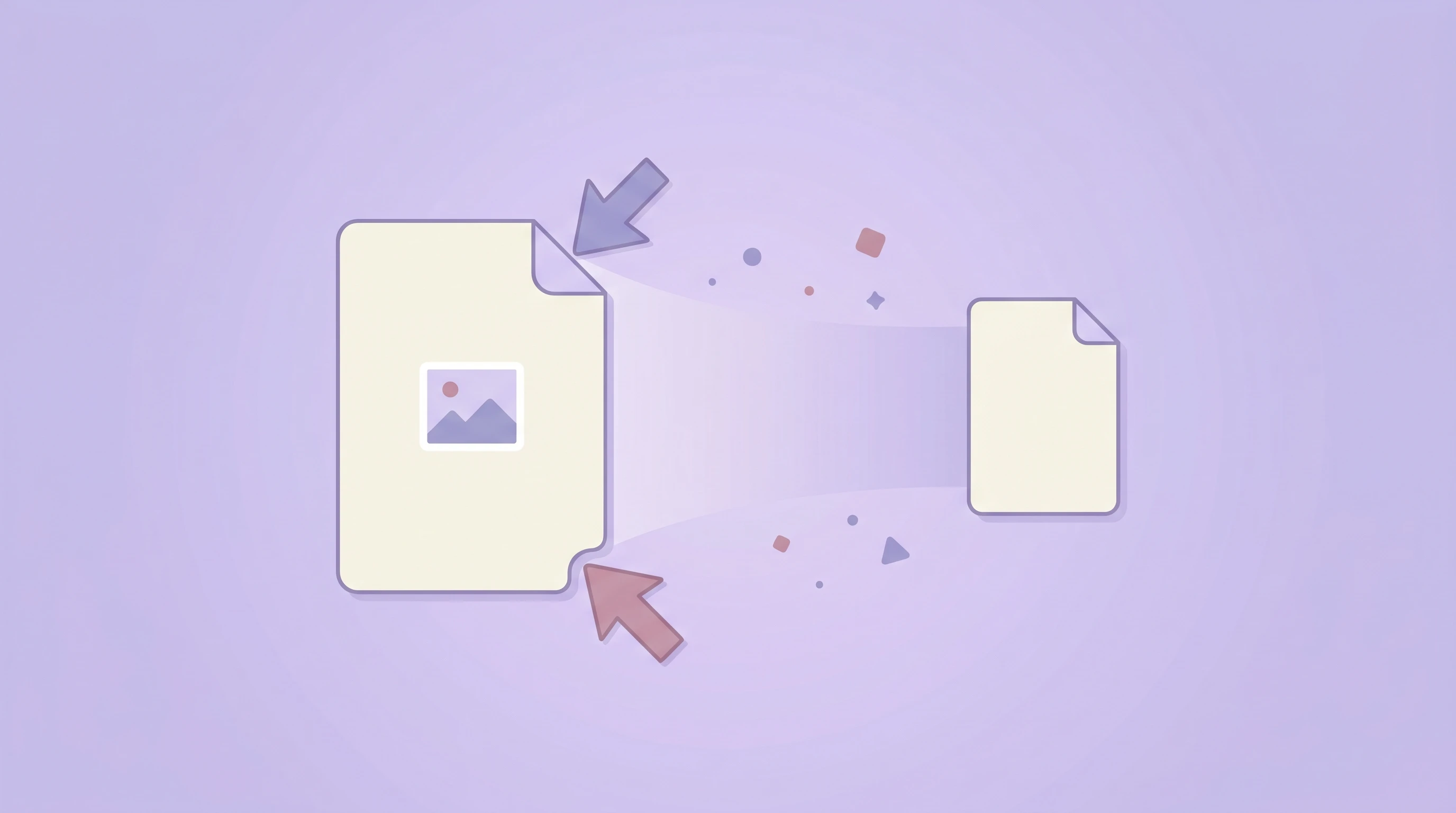
JPG is still everywhere, but it is no longer the most efficient choice for modern web delivery. If you want smaller images, faster pages, and a more up-to-date format without changing how you work, converting JPG to WebP is one of the easiest upgrades you can make.
Our JPG to WebP converter lets you do that directly in the browser, so you can modernize image assets without sending files to a server.
Why convert JPG to WebP?
The short answer is performance. WebP often produces smaller files than JPG while keeping strong visual quality. That means less bandwidth, faster loading, and lighter pages — especially helpful for websites with many images.
- Smaller files — often better than JPG at similar visual quality
- Faster page speed — lighter assets improve real-world loading time
- Modern delivery format — better suited to current web workflows
- Easy upgrade path — you can keep your image pipeline simple
Why WebP matters for websites
When a site contains dozens or hundreds of JPG images, even small savings per file add up quickly. A lighter image library can reduce page weight, improve responsiveness, and support better Core Web Vitals metrics.
That is why WebP became such an important step in modern image optimization. It is not just about one picture being a little smaller — it is about scaling those savings across an entire site.
When JPG to WebP is especially useful
Converting is most useful in situations like these:
- Website image libraries that still rely heavily on JPG
- Blog and CMS content where dozens of photos appear across many pages
- Landing pages where loading speed directly affects conversions
- Portfolio and gallery sites that need lighter delivery
- General performance cleanups during image optimization work
Will the image still look good?
In most cases, yes. WebP was designed to deliver better compression efficiency than older formats while preserving strong visual quality. For ordinary photographs and web images, the difference is often hard to notice at sensible settings.
That is what makes JPG to WebP such a practical change: you often get smaller files without making the images look obviously worse.
Should you replace every JPG?
Not necessarily. If a file only lives inside email attachments, office documents, or workflows where JPG already works perfectly, there may be no urgent reason to change it. WebP is most valuable when performance and modern browser delivery actually matter.
So the best target is usually your web-facing image set — not every JPG on your computer.
JPG to WebP is less about replacing history and more about improving what users download on today's web.
What about browser support?
For current browsers, WebP support is already strong enough for normal production use. That is why it is now common across websites, CMS pipelines, CDNs, and browser-based tools.
In other words, the format is modern, but it is no longer experimental. For most web projects, WebP is a safe and practical optimization step.
How to convert JPG to WebP privately
If you want a quick way to modernize image files, a browser-based converter is usually the fastest option. With our JPG to WebP tool, you can add one or multiple JPG files, convert them locally, and download the results right away.
- No upload required — files stay on your device
- Useful for batches — process multiple JPGs in one session
- Good for web publishing — ideal for site-ready image assets
- Easy performance win — a simple way to lighten image-heavy pages
Final take
JPG still works, but WebP is often the smarter format for modern websites. If you want smaller files, faster pages, and a straightforward image optimization upgrade, converting JPG to WebP is one of the most useful changes you can make.
If you are ready to modernize your images, try our free JPG to WebP converter. It is fast, private, and built for practical web performance improvements.