Gradient Design: Create Stunning Visual Backgrounds
Learn about gradient types, color theory basics, CSS syntax, and modern design trends.
Read MoreCreate stunning gradient backgrounds. Pick colors, adjust angle, preview in real time, copy CSS code, and download as PNG — all in your browser.
background: linear-gradient(135deg, #667eea 0%, #764ba2 100%);
See your gradient update instantly as you change colors, angle, or type. No waiting, no rendering delay.
Get production-ready CSS code for your gradient. One click to copy and paste directly into your stylesheet.
Download your gradient as a high-resolution PNG image. Perfect for backgrounds, social media headers, and presentations.
You can download the gradient as a PNG image at any resolution you specify. You also get the CSS code to use the gradient directly in your web projects without any image file.
Yes! Click "Add Color" to add additional color stops. You can add as many colors as you want and adjust each stop's position to create complex multi-color gradients.
Linear gradients transition colors along a straight line at the angle you specify. Radial gradients transition colors outward from a center point in a circular pattern. Linear is more common for backgrounds; radial works well for spotlights and vignettes.
Absolutely! The CSS output is production-ready and works in all modern browsers. Simply copy the code and paste it into your CSS file. Using CSS gradients instead of images improves page load speed.
The current version supports solid colors. For transparent gradients in CSS, you can manually edit the generated CSS code to use rgba() values (e.g., rgba(255, 0, 0, 0.5) for semi-transparent red).
Learn about gradient types, color theory basics, CSS syntax, and modern design trends.
Read More
Discover why WebP delivers smaller files while keeping the same visual quality as PNG.
Read More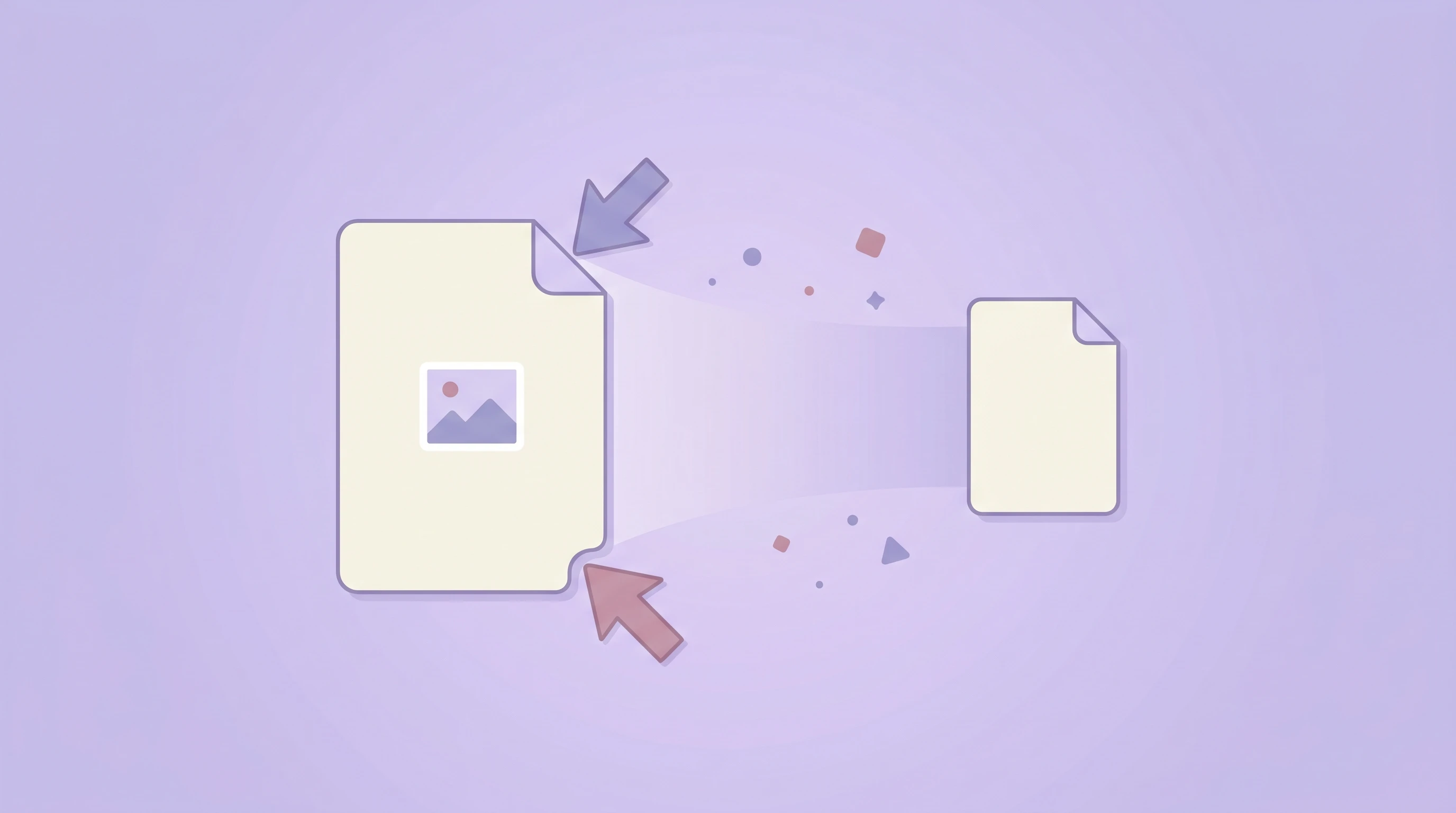
Master image compression techniques to speed up your website while maintaining visual quality.
Read More