GIF vs MP4: Which Format Should You Use?
Compare GIF and MP4 video formats — file size, quality, compatibility, and when to use each one.
Read MoreConvert animated GIFs to MP4 video — smaller file size, better quality, and universal playback. All processing happens in your browser.
Animated GIF • Max 50 MB
MP4 video uses modern compression, producing files up to 90% smaller than GIF while maintaining the same visual quality.
Video files play smoothly on every device and platform — social media, websites, presentations, and messaging apps.
Your GIF never leaves your browser. All decoding and video encoding happens locally — no uploads, no servers, no tracking.
Video formats like MP4 use modern compression that produces much smaller files — often 80-90% smaller than GIF. Videos also support millions of colors (vs. GIF's 256), play more smoothly, and are better supported on social media platforms.
The output format depends on your browser. Most modern browsers produce WebM (VP8/VP9) video, which is widely supported. Safari may produce MP4. Both formats are compatible with all major platforms.
The quality is actually better! GIF is limited to 256 colors per frame, while video supports millions. The converted video will look at least as good as the original GIF, often better, at a fraction of the file size.
Yes! You can choose from 0.5x (slow motion), 1x (original speed), 1.5x, or 2x playback. You can also set the number of loops to include in the output video.
You can upload GIFs up to 50 MB. Since all processing happens in your browser, very large GIFs may take longer to decode and convert. For best results, keep GIFs under 20 MB.
Compare GIF and MP4 video formats — file size, quality, compatibility, and when to use each one.
Read MoreEverything you need to know about GIF creation — from frame selection to optimization.
Read More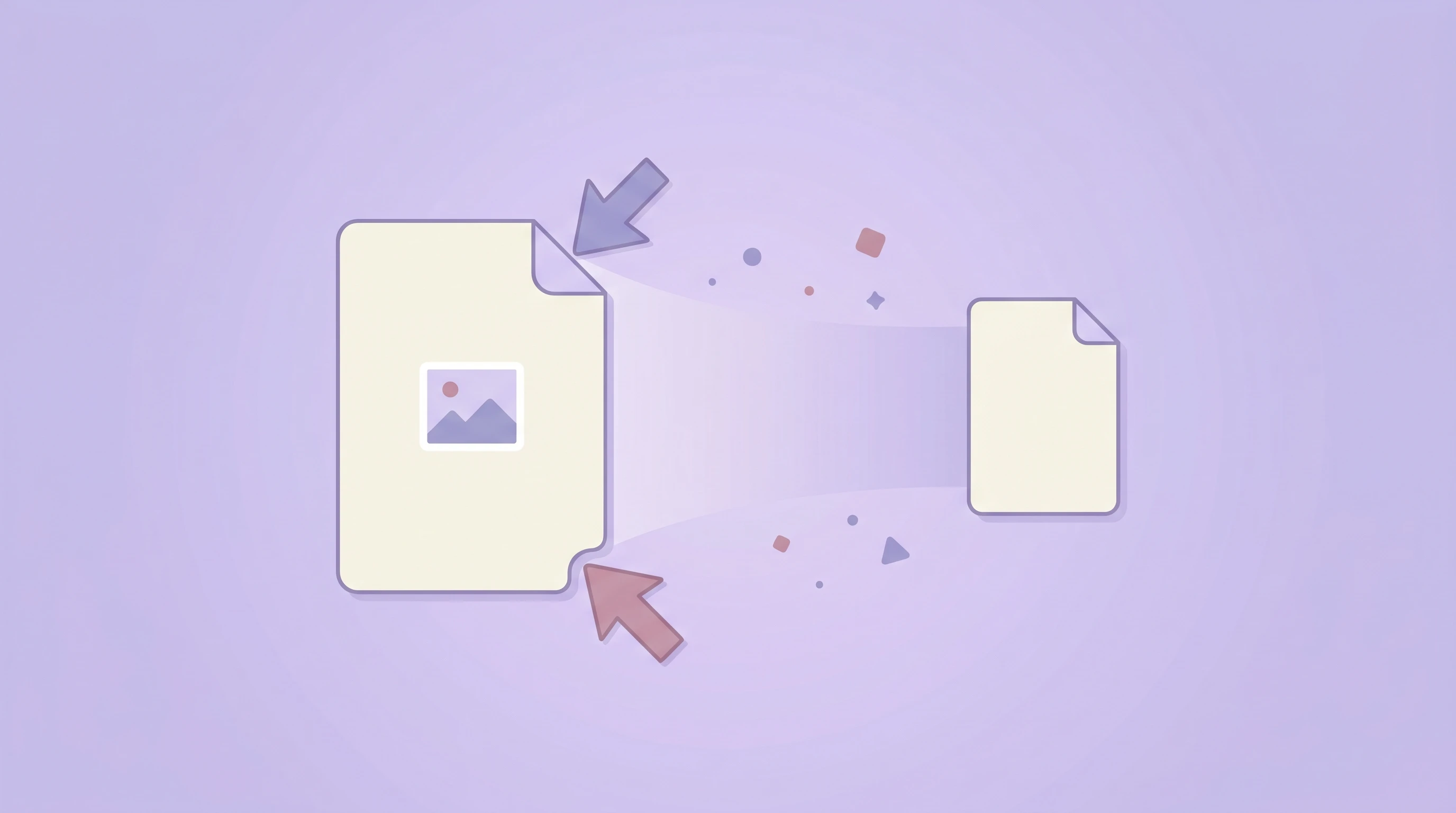
Master compression techniques to speed up your website while maintaining visual quality.
Read More